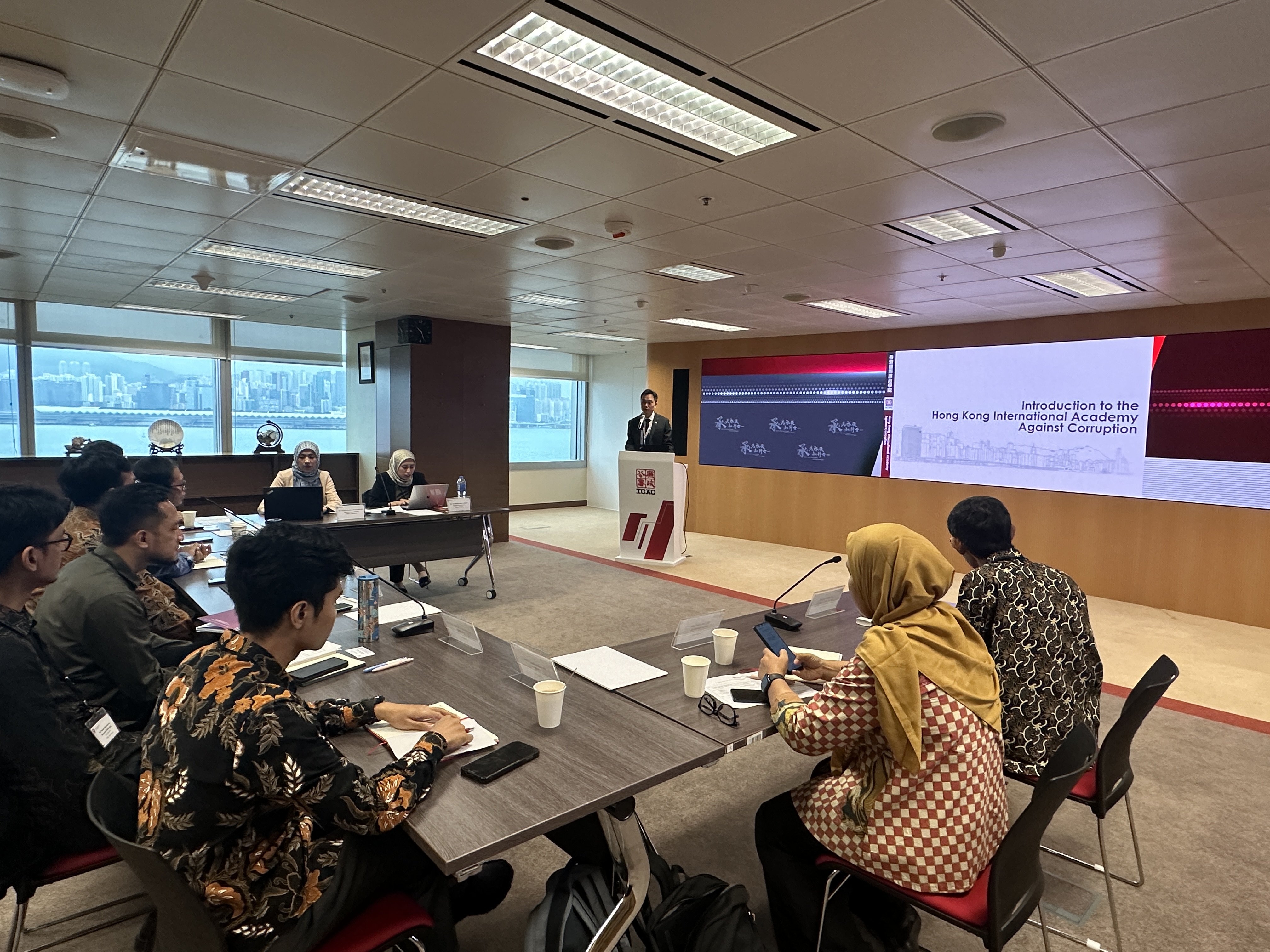
IAACA Knowledge Nexus Webinar Series Impacts of Corruption Education on Social Culture
BACKGROUND
Education plays a key role in the fight against corruption. Integrity education shapes attitudes and behaviors by fostering a strong sense of personal integrity, raising awareness of corruption's harmful impacts, and equipping individuals with practical skills and ethical reasoning needed to resist unethical practices. This approach cultivates resilient anti-corruption cultures and empowers future generations to challenge corruption while building transparent and accountable systems. Therefore, the effective implementation of anti-corruption education is essential to sustaining long-term probity and societal integrity.
This webinar illustrates how integrity education influences public tolerance of corruption and willingness to report it, shares effective integrity education programmes and highlights strategies for achieving impactful outcomes. We are thrilled to bring together distinguished speakers from Independent Commission Against Corruption of Hong Kong, China, National Transparency Authority of Greece, and Ethics and Anti-Corruption Commission of Kenya, to share holistic and society-wide approaches to fostering cultural shifts, promoting long-term commitment to ethical behavior, and building widespread intolerance of corruption through integrity education.
OBJECTIVES
The webinar will provide insights into effective anti-corruption education, with the following focused objectives:
- Understanding the correlation between integrity education and public awareness against corruption
- Addressing challenges and factors in achieving effective anti-corruption education
- Exploring society-wide approaches to engage community in anti-corruption efforts
WHO SHOULD ATTEND
Officers in anti-corruption authorities responsible for integrity education, corruption prevention, and those who are interested in the topic.
DATE & TIME
18 March 2026 (Wednesday)
4:00 pm – 5:30 pm (Hong Kong Time, UTC +8)
LANGUAGE
English
COURSE FEE
Free
PROGRAMME
Hong Kong Time (UTC+8) | Programme |
|---|---|
3:45 pm | Registration |
4:00 pm |
Introductory Remarks Mr C K CHEUNG Secretary-General, International Association of Anti-Corruption Authorities |
4:05 pm |
Topic The ICAC Annual Survey - From Understanding Public Attitudes to Measuring the Impact of Integrity Education
Speaker
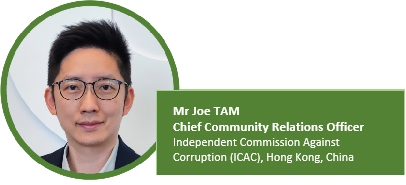
Brief Introduction This presentation will outline how the ICAC, Hong Kong conducts its Annual Survey, how the survey serves as a crucial tool for understanding public attitudes toward corruption, and how its findings can be utilized to refine anti-corruption strategies. Mr TAM will also discuss the impact of integrity education on the public's willingness to report corruption. |
4:30 pm |
Topic From Awareness to Action: Strengthening Public Integrity Through Social Engagement
Speakers
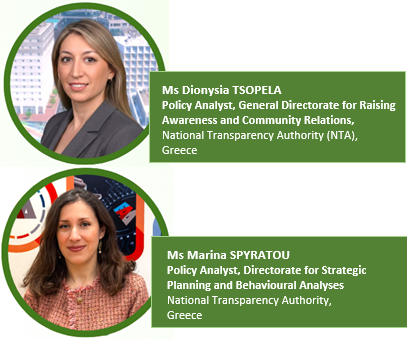
Brief Introduction This presentation will examine how the NTA integrates awareness campaigns into its broader anti-corruption strategy, highlighting targeted communication initiatives, educational programs, and public outreach actions designed to promote a culture of accountability and ethical conduct. It will also outline the strategic vision, priorities, and reform actions of the NTA aimed at enhancing integrity, transparency, and accountability across individuals and organizations, while strengthening coordination and interaction among them. |
4:55 pm |
Topic Impacts of Integrity Education on Anti-Corruption Awareness
Speaker
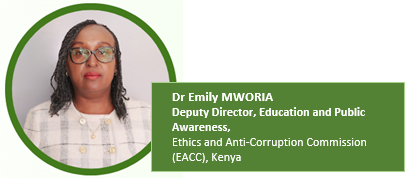
Brief Introduction This session will outline the vital role and impacts of Integrity Education on Anti-Corruption Awareness. Dr MWORIA will share EACC’s robust citizen engagement through various programmes targeting stakeholders by enlisting various partners from both the public and private sectors, state, and non-state actors. The presentation will also highlight the integrity education for youth through the establishment of Integrity clubs in institutions of learning, to mainstream ethical values and integrity with a view to model ethical behaviour. |
5:20 pm |
Q&A Session |
5:30 pm |
End of Programme |
(Deadline: 11 March 2026 (Wednesday))
